
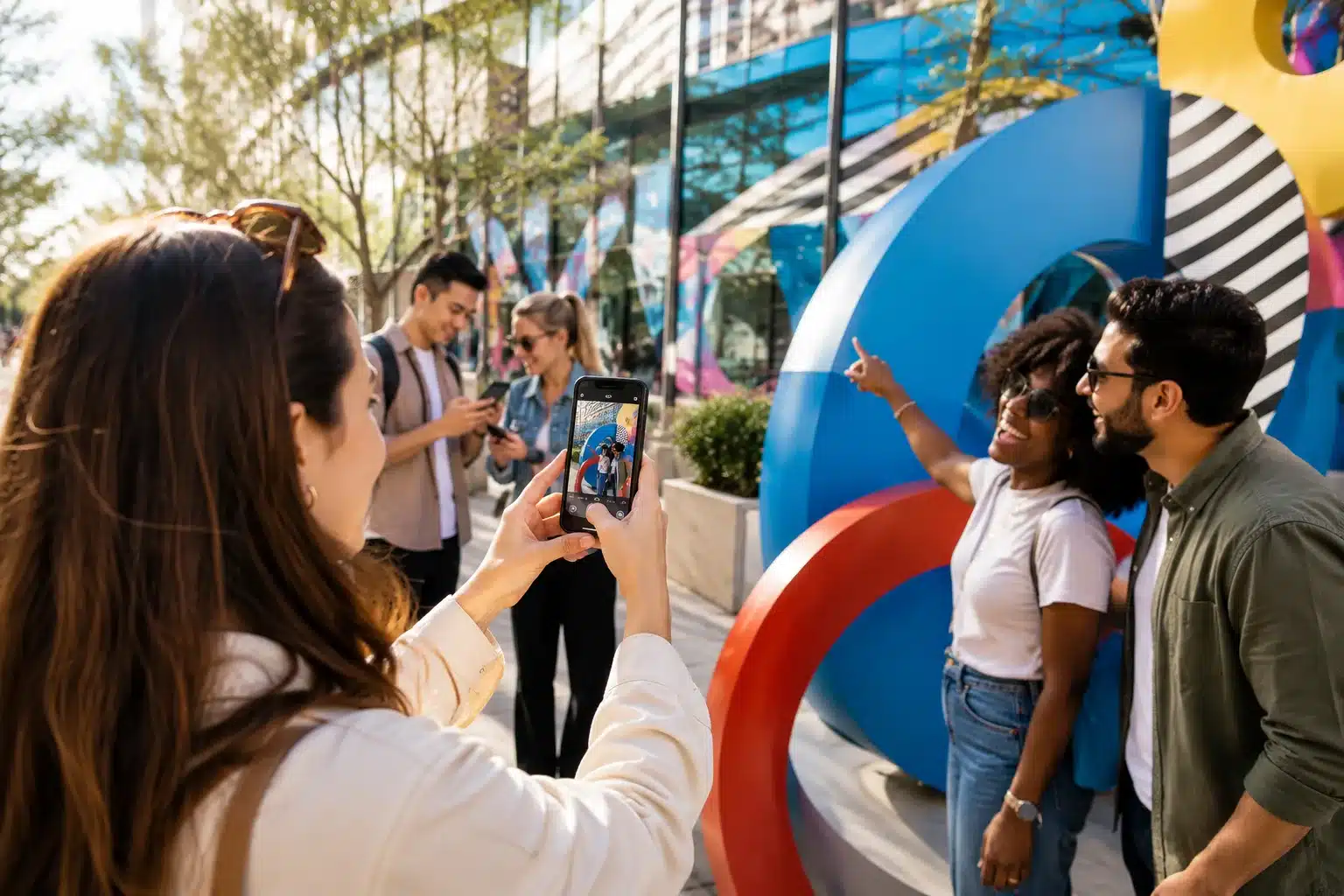
In Peoria County, Illinois, residents marked the county’s bicentennial by tracking down a herd of bison: 44 hand-painted, life-size sculptures hidden across the county. The Peoria County Bison Trek turned that public-art trail into a digital scavenger hunt, where residents checked in at each bison, climbed the badge tiers, and chased monthly prize drawings. It drew more than 11,000 community photos. A few states over, the City of Scottsdale ran an 87-stop hunt across an entire city for its 75th birthday. Same format, wildly different scale, and both worked for the same reason: a scavenger hunt turns a place, a brand, or an event into something people actively play instead of passively attend.
This is the complete guide to scavenger hunt ideas, built for the organizations that run them: destinations, brands, event teams, and communities. You’ll get the definition, ideas sorted by who’s running them and where, a bank of 50-plus prompts you can steal outright, and a step-by-step on how to run one that people actually finish. Real programs, real numbers, and a herd of bison.
What is a scavenger hunt?
A scavenger hunt is a game where participants work from a list of items, locations, or challenges to find, photograph, or complete, earning points or badges as they go. The format is ancient (it predates the smartphone by about a century), but the modern version runs on a phone: people scan a QR code or check in by location, snap a photo as proof, and climb a live leaderboard. The “hunt” can be a single park, a downtown, an entire city, a trade-show floor, a college campus, or a screen. What stays constant is the magic trick at the center: it converts a crowd of onlookers into a roster of participants, and hands the organizer a pile of photos and first-party data on the way out.
That makes the scavenger hunt one of the most flexible community event ideas going, equally at home as a downtown trail, a campus orientation, or a trade-show floor game.
Who runs scavenger hunts, and why?
Scavenger hunts aren’t one team’s tool. Four very different kinds of organizations run them, each chasing a different payoff.
Destinations and DMOs
Destination marketing organizations use them to move visitors around town and spread spending across more local businesses. The City of Scottsdale built its 75th Anniversary Scavenger Hunt on Seeker XP as a citywide game: 87 stops sorted into categories like Public Art, Historical Locations, and Parks and Preserves, eight collectible badges, and a climb toward 6,200 points. Visit Travelers Rest went small and charming with its six-rabbit chase along the Swamp Rabbit Trail, while Hudson County, New Jersey went big, threading 31 landmarks (national monuments to neighborhood diners) into one GPS check-in adventure across twelve municipalities. The common thread: the hunt is the reason a visitor walks three extra blocks.
Brands and Activations
Brands run them as experiential activations that produce content and leads. GoCamp turned van rentals into a gamified outdoor challenge, sending renters off with prompts to complete on the road and getting a stream of real adventure photos back. LG toured a four-room Innovation Experience through malls where shoppers scanned in, earned badges, and turned a foot-traffic moment into a clean dataset. The appeal is simple: a scavenger hunt gets people doing something with the product, and every completed prompt is user-generated content the brand didn’t have to produce. (For more on the format at event scale, see our guide to brand activation events.)
Events and Conferences
Event teams use them as event activations that turn attendees into participants and get people out of their seats. Visit Albuquerque ran a points-based photo scavenger hunt across 42 city locations for the 2026 PRSA Travel and Tourism Conference, logging 359 photos over four days and sending a room of travel writers out to actually experience the city. DevRev turned its Effortless Conference at Levi’s Stadium into a check-in challenge with five badges and a share of $1,400 in prizes. The same mechanic works for any conference looking for activities that beat a fourth panel of the day.
Communities and Campuses
Universities, towns, and member organizations use them to build belonging and pull people between services. Central State University energized its campus with a Marauder Passport that sent students checking in across campus life. Visit Big Sky made Community Week a town-wide check-in challenge, and AAHA! Virginia built a seven-month heritage challenge spanning 50-plus Black history sites across four trail regions, with check-ins earning heritage points toward 15 collectible badges. For these organizations, the hunt is a community-engagement engine that happens to be fun.
Scavenger Hunt Ideas by Setting
The setting shapes the hunt. Here’s how the format flexes, with the deep-dive guide for each.
Outdoor and Nature
The outdoors is the original scavenger hunt arena: trails, parks, and whole watersheds become the board. Visit Indy turned 58 miles of the White River into the White Riverway Rewards Pass, with GPS check-ins at 28 parks and nature preserves. Peoria County’s Bison Trek scattered 44 hand-painted bison sculptures across the county for its bicentennial, drawing 11,000-plus photos and proving the board can be a whole county, not just a trail. For the full outdoor playbook, see our outdoor scavenger hunt and nature scavenger hunt guides.
Indoor
Museums, malls, offices, and conference centers all make great indoor boards, which is why a rainy forecast never has to cancel anything. Indoor hunts lean on landmark-spotting, station check-ins, and photo prompts tied to fixed features. LG’s four-room mall installation is the indoor format at brand scale.
Citywide
A citywide hunt is a destination marketing asset: a QR or GPS network across downtown that routes visitors past dozens of businesses. Scottsdale’s 87 stops and Hudson County’s 31 landmarks across twelve towns show how far the format scales.
Virtual and Hybrid
No venue? No problem. A virtual scavenger hunt runs on photo prompts and a shared leaderboard that remote and in-person players join from the same place, which makes it a natural fit for distributed teams and hybrid events.
The Big Idea Bank: 50+ Scavenger Hunt Prompts
Steal these. Mix and match by audience and setting. The best lists pair a few easy wins with a couple of genuinely hard finds.
Photo and UGC Prompts
- Snap a photo in front of the most colorful mural in town.
- Capture a stranger’s dog wearing something it absolutely did not choose.
- Photograph your reflection in something that isn’t a mirror.
- Get the whole team in one shot with a local mascot or statue.
- Find a sign with a typo and document the evidence.
- Recreate a famous movie scene on location.
- Photograph the best golden-hour shot of a local landmark.
- Capture something that looks like a face but isn’t (a building, a car, a pretzel).
Landmark and Exploration Prompts
- Find the oldest building on the block and read its cornerstone.
- Photograph a historical marker most people walk right past.
- Locate a hidden alley, staircase, or courtyard.
- Find the highest public viewpoint you can reach on foot.
- Spot a piece of public art and name the artist.
- Find a street named after a person and look up who they were.
- Photograph a building older than the country (heritage trails only).
- Locate the official center of town, however the locals define it.
Nature and Outdoor Prompts
- Photograph a bird mid-flight (patience required).
- Find a leaf bigger than your hand.
- Snap a wildflower you can’t name, then identify it for bonus points.
- Capture a body of water, from a lake to a suspicious puddle.
- Find an animal track in mud, sand, or snow.
- Photograph the tallest tree on the trail.
- Catch a sunrise or sunset over the skyline.
Team and Group Challenges
- Form a human pyramid (or just a wobbly human triangle) in a public park.
- Trade something small with a local and document the swap.
- Get a group selfie with a costumed performer or street musician.
- Convince a stranger to teach you a five-second skill on camera.
- Spell your team name with objects you find on the ground.
- Find someone wearing your team color and recruit them for a photo.
Brand and Product Prompts
- Photograph the product in the wild, doing the thing it’s built for.
- Find the branded photo wall and strike your best pose.
- Capture the most creative use of the event hashtag.
- Hunt down the activation’s hidden Easter egg.
- Snap yourself trying a sample.
- Get a photo with a brand ambassador and ask them one real question.
Food and Local Business Prompts
- Photograph a dish from a locally owned restaurant you’ve never tried.
- Snap your drink at a local brewery, taproom, or coffee shop.
- Find the best dessert in town and let the leaderboard judge.
- Photograph a farmers-market find that surprised you.
- Capture a neon sign at a local business after dark.
- Collect a loyalty stamp or check-in from a participating shop.
- Photograph the most photogenic storefront on the street.
Clue and Riddle Style
- “I have keys but no locks, space but no room. You can enter, but can’t go in.” (A keyboard.)
- “Find where the town keeps its oldest stories.” (The library or historical society.)
- “Where the locals line up before they’re awake.” (The favorite coffee spot.)
- “Look up where two roads disagree.” (A fork, a Y-junction, or a quirky intersection.)
- “I’m visited most when the score is settled.” (The local stadium or field.)
- “Find the spot the postcards forgot.” (A genuine hidden gem.)
How to Run a Scavenger Hunt (Start to Finish)
You don’t need a big budget. You need a clear goal and a way to measure it.
- Pick one goal and one audience. Foot traffic for a destination, UGC for a brand, bonding for a team, belonging for a campus. The goal shapes every prompt.
- Map the board. Choose the area and plot the stops: a trail, a downtown grid, a festival footprint, a campus, or a screen.
- Write the prompts. Pull from the bank above. Mix easy early wins with a few harder finds so there’s a sense of progression.
- Add points, badges, and a real reward. A visible reward and a live leaderboard are what keep people moving past stop three. Seeker XP runs the QR or geolocation check-ins, digital badges, photo challenges, and leaderboard out of the box, the same engine behind every program in this guide.
- Promote it. A branded hashtag, on-site signage, email, and a feed of real participant photos extend the hunt far past its footprint.
- Prove the ROI. Tie the data back to the goal: photos collected, businesses visited, leads captured, badges earned. A hunt you can measure is one you can run bigger next year.
More Ways Teams Run Scavenger Hunts on Seeker XP
The format stretches further than any single list. A few more programs worth a look:
- Food and drink trails: Santa Rosa’s Beer Passport (now a 10-year tradition), Visit Mesa’s Beer Week and Banana Pass (a Savannah Bananas tie-in that drew 488,000 media impressions), Visit Stockton’s Flavor Fest, Westminster’s Restaurant Week, and the SCM Wine Adventure Pass, a paid pass built for the World Cup crowd.
- Seasonal and themed: Explore Butte County’s Dry January passport and Visit Rancho Cordova’s Summer of Shenanigans.
- Heritage and history: the Connecticut Revolutionary War Trail across 15 historic sites and 250 years of history.
- Niche and unexpected: Grange’s Home Tour, which turned a real estate tour into a hunt buyers actually finished, and Wellness Trinidad’s three-day wellness festival.
Different audiences, same engine: find, check in, earn, repeat.
Frequently Asked Questions
The best scavenger hunt ideas reward creativity and exploration rather than simple finding: photograph a mural, recreate a movie scene on location, find the best dessert in town, or capture the most creative use of an event hashtag. Mix a few easy wins with destination-specific stops that pull people somewhere new, and add a real prize and a live leaderboard to keep people going.
For a large group, spread the prompts across a wide area so people aren’t crowding the same spot, and run it digitally so you’re not managing paper lists. A QR- or geolocation-based hunt lets hundreds or thousands participate at their own pace, check in independently, and compete on a shared leaderboard. Citywide programs like Scottsdale’s 87-stop hunt show the format scales to an entire city.
Adults enjoy riddle-style clues that point to a place rather than name it (“find where the town keeps its oldest stories” for the library), photo challenges with a creative twist, and competitive prompts tied to a leaderboard and a worthwhile prize. Pair a few clever riddles with achievable photo prompts so the difficulty curve stays fun, not frustrating.
Use a digital platform that handles check-ins, photo uploads, badges, and a leaderboard. Participants scan a QR code or check in by location, complete prompts on their phones, and track progress in real time, while you get a live dashboard of who did what and where. Seeker XP is built for exactly this, with no app download required.