
The stores that are winning right now aren’t the ones with the best products or the lowest prices. They’re the ones that give people a reason to show up that has nothing to do with buying something. That’s the premise behind retailtainment: making the physical retail environment worth visiting by turning it into an experience, not just a transaction.
Retailtainment is one of the most commercially scaled expressions of experiential marketing — applying the same principles of immersion, active participation, and emotional connection that drive event campaigns permanently to the retail floor.
This guide covers what retailtainment is, why it works, the technology that powers it, and real examples of brands doing it well, including how gamified digital experiences are extending retailtainment beyond the store floor.
What Is Retailtainment?
Retailtainment is the integration of entertainment into the retail environment to make shopping engaging, participatory, and memorable. It transforms stores from transaction points into destinations: places where customers enjoy spending time, not just picking up products.
The concept isn’t new. Theme parks, flagship stores, and experiential pop-ups have been doing this for decades. What’s changed is the scale and accessibility. AR, gamification, digital passport mechanics, and live events have made retailtainment viable for brands of all sizes, not just flagship stores in major cities.
The strategic case is straightforward: foot traffic is harder to earn than ever, e-commerce handles routine purchases faster and cheaper, and the physical store’s only remaining advantage is the experience it can deliver. Retailtainment is what turns that advantage into something measurable.
Key Characteristics of Retailtainment
Experience Over Transaction
Traditional retail optimizes for purchase completion. Retailtainment optimizes for time spent and emotional connection, with purchase as a byproduct rather than the primary goal. Nike’s flagship stores are built around the brand story rather than inventory display — the product is almost incidental to the experience of being there.
Active Participation
Retailtainment replaces passive browsing with interactive displays, live demonstrations, challenges, and gamified mechanics. Customers do something rather than just look at things.
Community and Repeat Visitation
The best retailtainment programs build a reason to return that isn’t dependent on new inventory. Events, seasonal programming, challenges, and loyalty mechanics all serve this function.
Shareable Moments
A retailtainment environment is designed to be photographed and shared. The Instagrammable moment isn’t accidental — it’s a deliberate content generation mechanism that extends reach beyond the people who physically visit.
Why Retailtainment Matters in 2026
E-Commerce Has Raised the Bar for Physical Retail
If a customer can buy the same product online in 30 seconds, the physical store needs to offer something the screen can’t. Convenience isn’t it — e-commerce already wins that. Experience is the only durable differentiator left for brick-and-mortar retail, and retailtainment is how you build it deliberately rather than hoping it happens.
Younger Consumers Spend on Experiences, Not Stuff
According to Eventbrite’s research on the experience economy, 78% of millennials would rather spend money on a desirable experience than a desirable thing. Gen Z follows the same pattern. Retailtainment meets that preference directly by turning the shopping environment into something worth being part of.
Social Media Has Made In-Store Moments Marketable
A well-designed retailtainment activation doesn’t just generate in-store engagement — it generates content. Every participant who posts from your activation is a distribution channel. The most effective retailtainment programs are built with the content layer explicitly in mind: what will people photograph, what will they caption, what hashtag will they use.
First-Party Data Is Now a Competitive Advantage
As third-party cookies phase out, the data collected through in-store engagement programs, gamified challenges, and digital passport check-ins becomes genuinely valuable. Retailtainment that requires opt-in participation generates first-party data at the point of highest engagement — when a customer is physically present and actively interested.
Real-World Examples of Retailtainment
Nike Flagship Stores
Nike’s flagship stores feature interactive zones where customers test products, customize gear, and participate in fitness challenges. The stores are built around the brand story rather than inventory display — visiting feels like participating in the Nike world, not shopping in a shoe store.
LEGO Stores
LEGO stores worldwide host building competitions, workshops, and interactive play areas where children and adults create together. The experience is the product — the physical sets are almost a souvenir of having been there.
Samsung 837 (2016 to 2020)
Samsung’s former New York space functioned as a tech playground rather than a traditional retail store. VR experiences, interactive art installations, and cooking demonstrations using Samsung appliances created a brand immersion environment where the goal was storytelling, not selling. The space closed in 2020 but remains one of the clearest examples of retailtainment done at scale — a brand investing in experience as the primary product.
LG Innovation Experience Tour
At the retail and brand activation level, LG’s Innovation Experience Tour used Seeker XP’s digital passport mechanics to turn a multi-stop product showcase into a gamified experience. Participants checked in at product stations, earned badges, and competed on a leaderboard, transforming what would have been a passive product demo circuit into an active, competitive participation loop.
The Technology Behind Retailtainment
Augmented Reality
AR allows customers to visualize products in their own environment before purchasing. IKEA’s AR app lets users place virtual furniture in their homes to check fit and scale before buying. Beauty brands use AR mirrors to let customers try on products without physical application. The approach reduces purchase anxiety and increases conversion by making the decision more concrete.
Virtual Reality
VR creates immersive brand environments that physical stores can’t replicate. North Face used VR in a 2014 pop-up campaign to transport customers to outdoor locations, putting them in context with the gear rather than just showing it on a shelf. The emotional association built through that kind of experience is difficult to achieve through any other channel, and the mechanic has since been adopted across retail, automotive, and travel marketing.
Interactive Displays
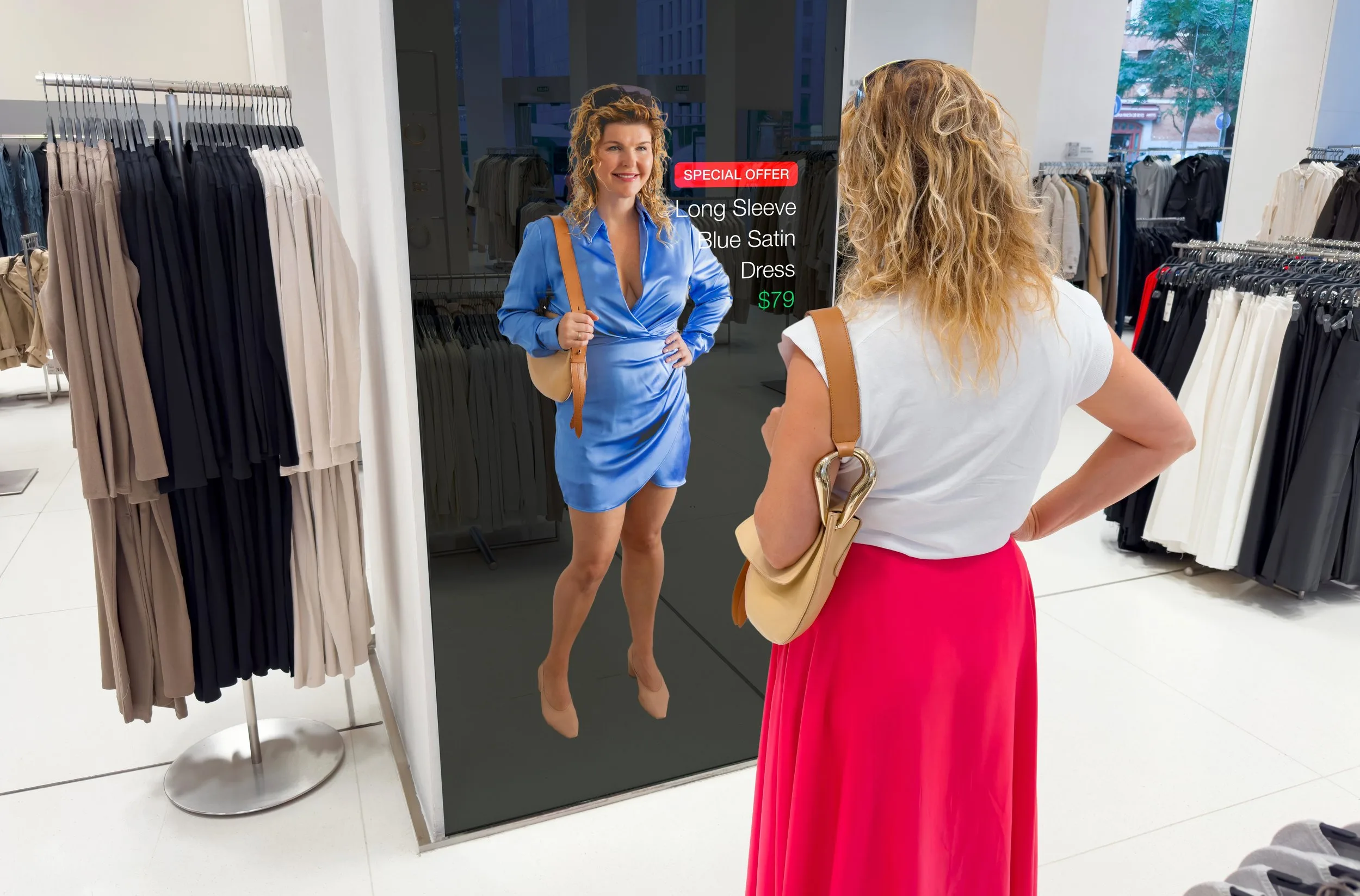
Touchscreens and interactive displays let customers explore product information, customization options, and tutorials at their own pace. Sephora’s Virtual Artist mirrors allow customers to virtually try on makeup in-store, serving both engagement and education functions simultaneously.
Gamification and Digital Passports
Gamification adds competition, reward, and progress mechanics to the retail experience. The most effective implementations use points, badges, challenges, and leaderboards to motivate participation and repeat visits. Digital passport programs extend this beyond a single visit: a customer who checks in at multiple store locations or completes a branded trail earns rewards at each step, building a participation habit rather than a one-time interaction. These programs also collect first-party data at every check-in, giving brands a clear picture of who participated, where, and how many times.
Retailtainment and Brand Activation
Retailtainment and brand activation are increasingly the same discipline. The mechanics that make a retail environment worth visiting — gamification, live events, interactive technology, participatory challenges — are the same ones that power event sponsorship activations, pop-up experiences, and destination marketing programs. The difference is venue, not strategy.
For brands running activations at retail events, trade shows, or branded pop-ups, Seeker XP builds the gamification and passport layer that turns passive foot traffic into active participants. If you want to see what that looks like in practice, book a demo and we can walk through it.
Frequently Asked Questions
What is an example of retailtainment?
Nike’s flagship stores are a textbook example: interactive customization zones, in-store fitness challenges, and product testing areas that make visiting the store an experience rather than a transaction. At a smaller scale, any brand that runs a gamified check-in challenge, scavenger hunt, or digital passport across retail locations is practicing retailtainment.
What is the difference between retail and retailtainment?
Traditional retail is optimized for purchase completion. Retailtainment is optimized for experience and time spent, with purchase as a downstream outcome rather than the primary goal. The layout, staffing, technology, and programming of a retailtainment environment are all designed around participation, not conversion.
Why is retailtainment important?
Because e-commerce has made routine purchasing faster and cheaper than physical retail can match. The only durable advantage a physical store has is the experience it delivers. Retailtainment is how that advantage gets built deliberately — through technology, events, gamification, and environments designed to be worth visiting.
What technology is used in retailtainment?
The most common technologies are AR (product visualization), VR (immersive brand environments), interactive displays and mirrors (product exploration and customization), and gamification platforms (challenges, leaderboards, digital passports, and reward mechanics). These are increasingly used in combination rather than in isolation.
How does retailtainment generate data?
Gamified check-in programs, digital passport mechanics, and app-based loyalty challenges all require opt-in participation, which generates first-party data at the point of engagement. Every check-in, badge earned, or challenge completed is a data point that tells you who showed up, where, and how many times, without relying on third-party tracking.